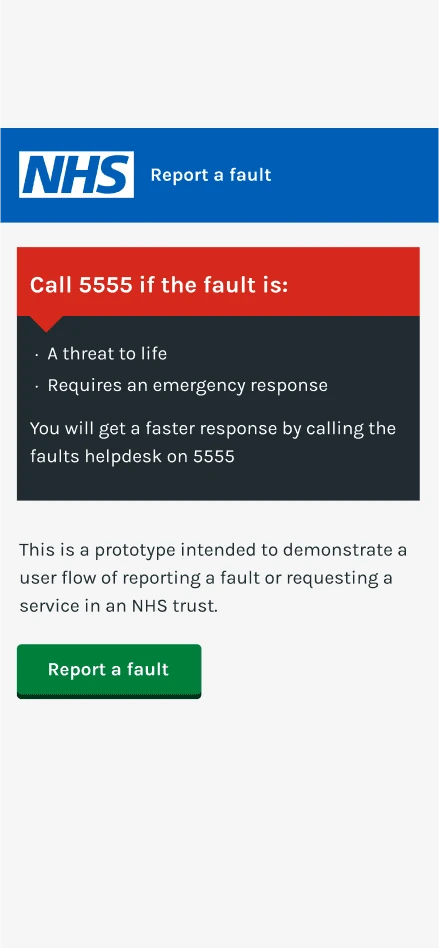
The stakes
NHS trusts manage billions in physical assets, and when equipment or facilities fail, patient care feels it. Frontline staff at major trusts were reporting faults by phone, taking around three minutes per report.
That sounds reasonable until you multiply it across hundreds of reports a day, mid-shift, on shared devices with poor connectivity. It was enough friction that many faults simply went unreported, and unreported faults became unresolved ones, compounding into safety risks and reactive maintenance costs.
Research
I ran four weeks of fieldwork across three NHS trusts: contextual inquiry on wards, in-depth interviews with facilities managers, and surveys of nurses, porters, facilities managers and administrators. Three findings shaped everything:
- Reporting felt pointless
- Staff never saw what happened after they reported. Reports seemed to disappear, which eroded trust and discouraged the next one.
- The environment was hostile to interruption
- Shared or ageing phones, intermittent Wi-Fi, a busy ward round. Any snag, from a mandatory dropdown to a dropped signal, meant the report was abandoned.
- Classification was a bottleneck
- Staff couldn't tell whether a fault was already reported, so duplicates wasted everyone's time.
Design approach
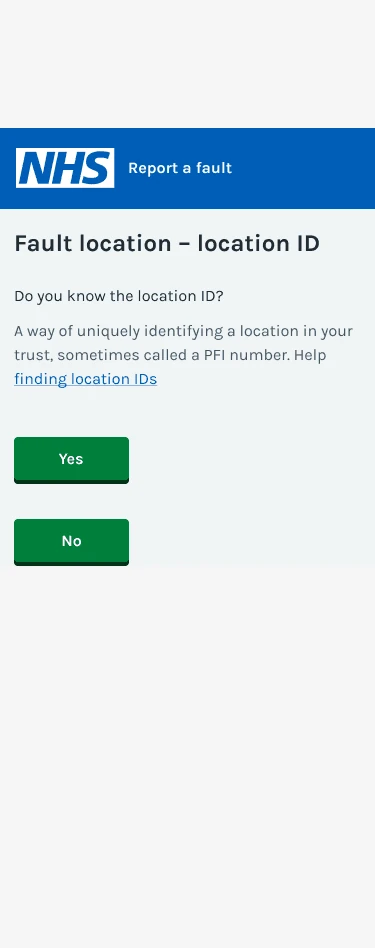
- Location by QR code, not dropdown
- Staff scan a code on the equipment or room, removing a multi-step lookup that ate much of the reporting time. I explored GPS, but it couldn't give room-level accuracy inside hospital buildings.
- Photo-first capture
- A photo replaced several descriptive fields: less effort for the reporter, richer context for maintenance.
- Offline-first
- Reports queue locally and sync in the background, so unreliable NHS Wi-Fi never blocks anyone.
- Closing the loop
- Status updates show reporters their fault was acknowledged, assigned and resolved, rebuilding the trust the old process had broken.
Location ID first 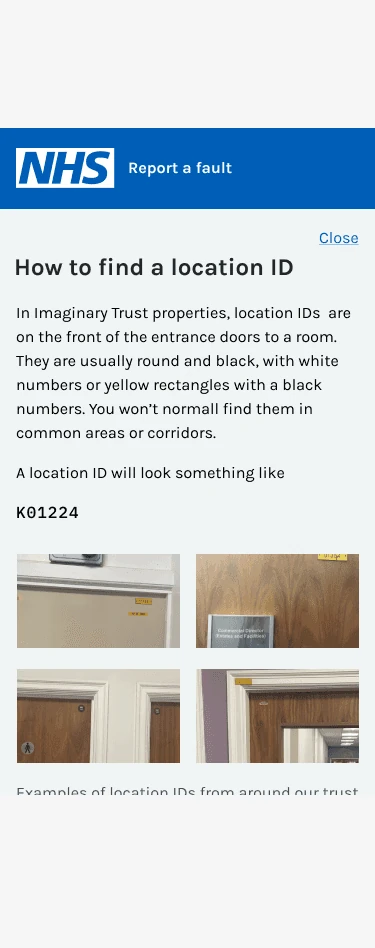
Help finding it 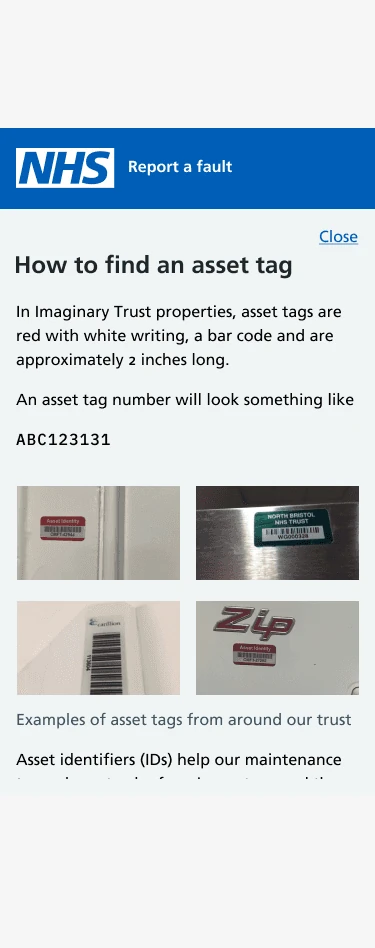
Asset tags explained 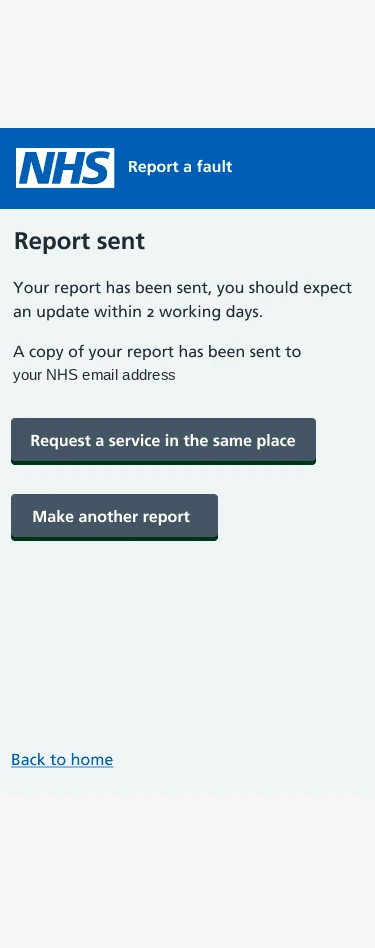
Loop closed
Impact
- increase in fault reports in the first quarter
- 340%
- average report time, down from around three minutes
- <60s
- reduction in reporting time
- 67%
Together these tell one story: reducing friction didn't just make reporting faster, it made reporting happen. The old process wasn't only slow, it was suppressing reports altogether.
Reflection
In healthcare, friction isn't just a usability problem, it's a patient safety problem. The counterintuitive lesson was that the biggest gain came from making reporting feel worth doing. Closing the feedback loop mattered as much as cutting form fields.
- What I'd do differently
- Push for integration with the trust's CAFM system much earlier, rather than treating it as phase two.
- What I learnt
- Prototype inside the constraints first. Designing the ideal and then compromising costs more.